
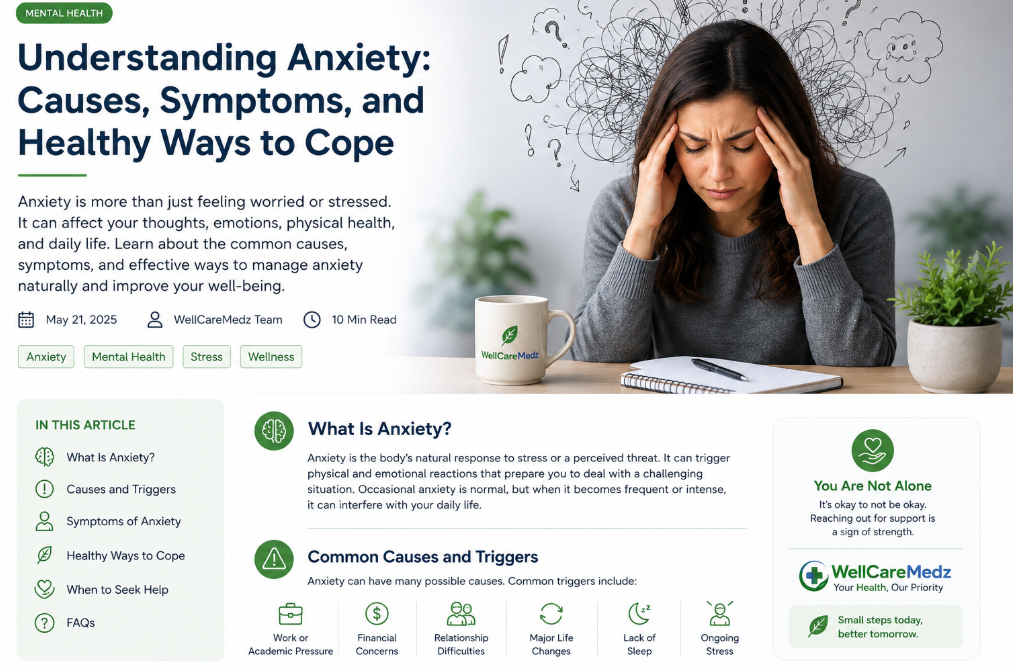
Understanding Anxiety: Causes, Symptoms, and Healthy Ways to Cope
Anxiety is one of the most common emotional experiences people face. Feeling nervous before an important event, worrying about a difficult situation, or experiencing temporary stress is a normal part of life. Anxiety becomes more concerning when feelings of fear, worry, or nervousness are persistent, difficult to control, or begin interfering with everyday activities.
Understanding anxiety can help people recognize its symptoms, identify possible triggers, and explore healthy ways to support their mental well-being. This article explains what anxiety is, common causes and symptoms, practical coping strategies, and when professional support may be appropriate.
What Is Anxiety?
Anxiety is the body’s natural response to stress or a perceived threat. When a person feels that something may be dangerous or uncertain, the body’s nervous system can become more alert. This response can produce physical sensations such as a faster heartbeat, muscle tension, sweating, or changes in breathing.
Occasional anxiety can be useful because it may encourage a person to prepare for challenges or respond quickly to danger. For example, feeling nervous before an examination or presentation can motivate someone to prepare carefully.
However, anxiety that occurs frequently or without an obvious immediate threat can become disruptive. When worry begins affecting sleep, concentration, relationships, work, school, or other daily activities, it may be worth discussing with a qualified healthcare professional.
Common Causes and Triggers of Anxiety
Anxiety does not have one single cause. Different people may experience anxiety for different reasons, and several factors can contribute to symptoms.
Common triggers can include work or academic pressure, financial concerns, relationship problems, major life changes, ongoing stress, lack of sleep, and difficult personal experiences.
Physical health and certain medications or substances may also influence anxiety symptoms. Caffeine, for example, can cause increased nervousness or a racing heartbeat in some people.
Sometimes anxiety can occur even when a person cannot identify a specific trigger. This does not make the experience less real or important. Persistent symptoms can still be discussed with a healthcare professional.
Common Symptoms of Anxiety
Anxiety can affect both emotional well-being and physical health. Symptoms vary from person to person and may range from mild to severe.
Emotional Symptoms
Common emotional symptoms may include:
- Excessive or persistent worrying
- Feeling nervous or restless
- Difficulty relaxing
- Irritability
- Difficulty concentrating
- Feeling overwhelmed
- Fear about future events
Physical Symptoms
Physical symptoms can include:
- Rapid heartbeat
- Sweating
- Muscle tension
- Shaking
- Headaches
- Stomach discomfort
- Difficulty sleeping
- Changes in breathing
Experiencing one or more of these symptoms does not automatically mean that someone has an anxiety disorder. Similar symptoms can occur for many other reasons, which is why persistent or concerning symptoms should be evaluated appropriately.
Anxiety and Everyday Stress: What’s the Difference?
Stress and anxiety can feel similar, but they are not always the same.
Stress is commonly connected to a specific challenge or situation. For example, someone may feel stressed because of an upcoming deadline, examination, financial responsibility, or difficult conversation.
Anxiety can continue even when there is no immediate problem. A person may experience ongoing worry about possible future events or situations.
Both stress and anxiety can affect sleep, concentration, mood, and physical comfort. Learning to recognize patterns in your symptoms can help you decide whether additional support may be useful.
Healthy Ways to Cope With Anxiety
There are several healthy habits that may support emotional well-being and help people manage everyday stress and anxiety.
1. Practice Slow Breathing
When you feel overwhelmed, try slowing your breathing and paying attention to each breath. Comfortable, controlled breathing can provide a simple way to focus your attention and encourage relaxation.
Avoid forcing deep breaths if they make you uncomfortable. Instead, breathe naturally and slowly.
2. Maintain a Consistent Sleep Routine
Sleep plays an important role in overall physical and emotional health. Going to bed and waking up at approximately the same time each day can help establish a consistent routine.
Creating a relaxing bedtime environment, limiting stimulating activities before bed, and avoiding excessive caffeine late in the day may also support better sleep.
3. Stay Physically Active
Regular physical activity can benefit both physical and mental well-being. Walking, cycling, stretching, swimming, or participating in a sport you enjoy can be practical ways to stay active.
The goal does not have to be intense exercise. Consistency and choosing an activity that fits your lifestyle are often more important.
4. Pay Attention to Caffeine and Other Stimulants
Some people become more nervous or restless after consuming caffeine. Coffee, energy drinks, tea, and certain other products can contain caffeine.
If you notice that caffeine makes your symptoms worse, consider discussing your intake with a healthcare professional and reducing it gradually if appropriate.
5. Stay Connected With Supportive People
Social connection can be valuable during stressful periods. Talking with a trusted friend, family member, counselor, or another supportive person may help you feel less isolated.
You do not necessarily have to explain everything at once. Simply sharing how you are feeling can be a useful first step.
6. Practice Mindfulness
Mindfulness involves paying attention to the present moment rather than becoming completely absorbed in worries about the past or future.
Simple activities such as mindful breathing, walking, journaling, or paying attention to your surroundings can help develop greater awareness of thoughts and emotions.
7. Create a Manageable Daily Routine
Large responsibilities can sometimes feel overwhelming when viewed all at once. Breaking tasks into smaller steps can make them feel more manageable.
Creating a simple daily schedule with time for work, rest, meals, physical activity, and enjoyable activities may also provide a greater sense of structure.
When Should You Seek Professional Support?
Everyone experiences worry from time to time. However, professional support may be appropriate when anxiety becomes persistent, severe, difficult to control, or disruptive to everyday life.
Consider speaking with a qualified healthcare or mental health professional if anxiety is affecting your sleep, relationships, work, education, concentration, or ability to complete normal activities.
A professional can help assess symptoms, consider possible underlying causes, and discuss appropriate treatment or support options. Treatment may vary depending on the individual’s circumstances.
It is important not to diagnose yourself based solely on information found online. A healthcare professional can provide an individualized assessment.
Frequently Asked Questions
Is anxiety normal?
Yes. Occasional anxiety is a normal human response to stress, uncertainty, or challenging situations. Persistent or severe anxiety that interferes with everyday life may require professional attention.
Can exercise help with anxiety?
Regular physical activity can support overall physical and emotional well-being and may help some people manage everyday stress. Choose activities that are appropriate for your fitness level and health needs.
Can anxiety affect sleep?
Yes. Persistent worry can make it difficult to fall asleep, stay asleep, or feel rested. Maintaining a consistent sleep routine may support better sleep habits.
Should I avoid caffeine if I experience anxiety?
Not everyone needs to avoid caffeine. However, some people find that caffeine increases nervousness, restlessness, or a racing heartbeat. If you notice this pattern, consider discussing your caffeine consumption with a healthcare professional.
Can anxiety be treated?
Yes. Anxiety-related conditions can be managed with professional support. Depending on the individual’s situation, treatment may include psychological therapies, lifestyle approaches, medication, or a combination of approaches recommended by a qualified professional.
Final Thoughts
Anxiety can affect thoughts, emotions, physical sensations, sleep, and everyday activities. While occasional anxiety is a normal part of life, persistent or overwhelming symptoms deserve attention.
Healthy habits such as regular physical activity, consistent sleep, supportive relationships, mindfulness, manageable routines, and paying attention to potential triggers can support overall well-being. When anxiety begins interfering with daily life, speaking with a qualified healthcare professional can be an important next step.
Understanding anxiety is not about eliminating every stressful feeling. Instead, it is about recognizing what you are experiencing, developing healthy coping skills, and knowing when additional support may be helpful.